Introduction
Object detection has become one of the most important technologies in modern artificial intelligence. From autonomous vehicles and smart surveillance systems to healthcare diagnostics and retail analytics, object detection models enable machines to identify, classify, and locate objects within images and videos with remarkable precision.
As we move into 2026, object detection technology continues to evolve rapidly. Traditional convolutional neural network (CNN) architectures are increasingly being combined with transformer-based models, foundation models, and multimodal AI systems. This evolution has significantly improved detection accuracy, speed, scalability, and adaptability across industries.
In this comprehensive guide, we explore the best object detection models for computer vision in 2026, compare their strengths and limitations, and help organizations choose the right model for their AI applications.
What Is Object Detection?
Object detection is a computer vision task that identifies and locates objects within an image or video stream.
Unlike image classification, which assigns a label to an entire image, object detection provides:
- Object category
- Bounding box coordinates
- Confidence score
- Multiple object recognition in a single image
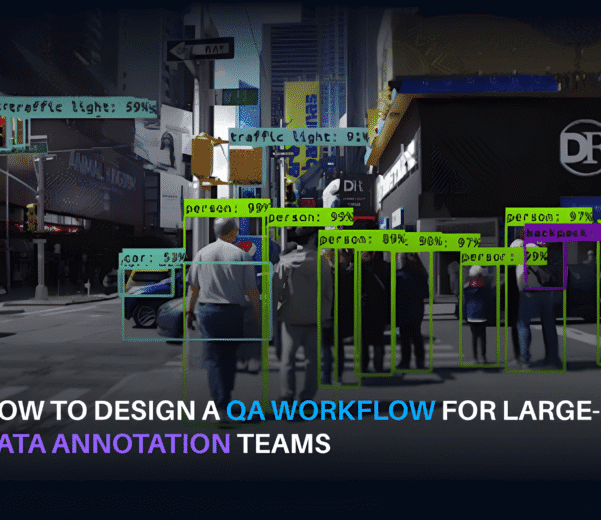
For example, an object detection system analyzing a street scene can detect:
- Cars
- Pedestrians
- Traffic lights
- Bicycles
- Road signs
all simultaneously.
Why Object Detection Matters in 2026
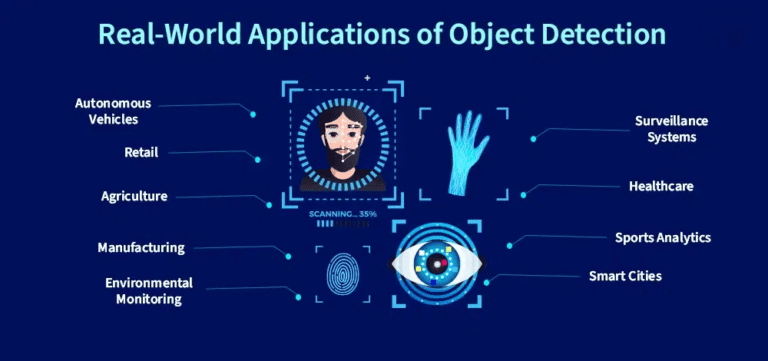
Organizations increasingly rely on object detection to automate visual understanding tasks.
Major applications include:
Autonomous Vehicles
- Vehicle detection
- Lane detection
- Pedestrian tracking
- Traffic sign recognition
Healthcare
- Tumor detection
- Medical imaging analysis
- Surgical assistance
Retail
- Shelf monitoring
- Customer analytics
- Inventory management
Manufacturing
- Quality inspection
- Defect detection
- Safety monitoring
Agriculture
- Crop monitoring
- Weed detection
- Livestock tracking
Security and Surveillance
- Intrusion detection
- Facial recognition support
- Anomaly detection
As these industries expand their AI capabilities, choosing the right object detection model becomes critical.
Key Evaluation Metrics for Object Detection Models
Before comparing models, it is important to understand the metrics commonly used.
Mean Average Precision (mAP)
Measures detection accuracy across different classes.
Higher mAP indicates better performance.
Frames Per Second (FPS)
Measures inference speed.
Higher FPS is essential for real-time applications.
Latency
Time required to process a single image.
Lower latency improves responsiveness.
Model Size
Important for edge deployment and mobile devices.
Computational Cost
Determines hardware requirements and deployment expenses.
1. YOLOv12 – The Leading Real-Time Detection Model
YOLO (You Only Look Once) remains one of the most popular object detection families.
YOLOv12 represents a significant evolution in speed, accuracy, and efficiency.
Key Advantages
- Extremely fast inference
- Excellent real-time performance
- High mAP scores
- Edge-device friendly
- Simplified deployment
Best Use Cases
- Autonomous robots
- Smart cameras
- Drones
- Traffic monitoring
- Retail analytics
Strengths
- Low latency
- High throughput
- Strong balance of speed and accuracy
Limitations
- May struggle with extremely small objects compared to transformer-based models

2. RT-DETR – The Best Real-Time Transformer Detector
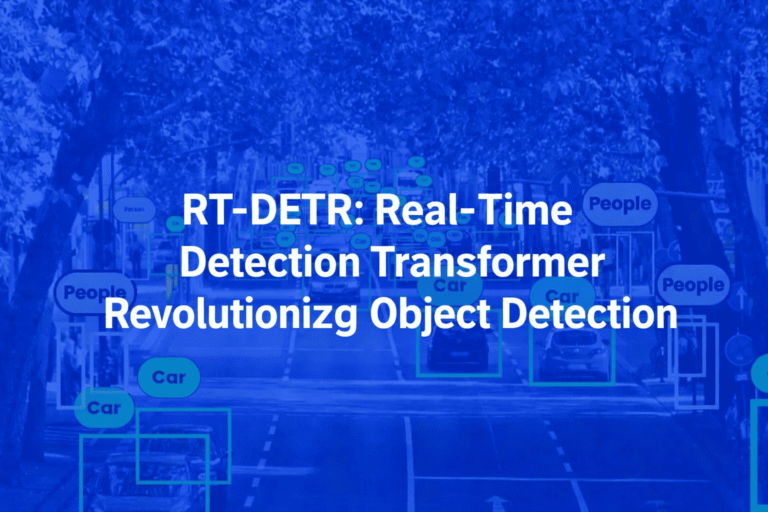
RT-DETR has emerged as one of the strongest transformer-based object detection models.
Unlike traditional DETR architectures, RT-DETR is optimized for real-time applications.
Key Features
- End-to-end detection
- No NMS requirement
- Transformer architecture
- Fast inference
Advantages
- Superior accuracy
- Cleaner detection pipeline
- Excellent scalability
Best Applications
- Autonomous driving
- Industrial automation
- Smart cities
- Video analytics
RT-DETR is expected to remain a top choice throughout 2026.
3. Grounding DINO – Best Open-Vocabulary Detector
Grounding DINO represents a major shift toward open-world object detection.
Instead of detecting only predefined classes, it can detect objects based on natural language prompts.
Example
Prompt:
“Find all red motorcycles.”
The model can locate motorcycles without specific retraining.
Advantages
- Open-vocabulary detection
- Language-guided recognition
- Foundation model integration
Applications
- Robotics
- Search systems
- Visual assistants
- Security systems
Grounding DINO is becoming essential for next-generation AI applications.

4. DINO-DETR – High-Accuracy Transformer Detection
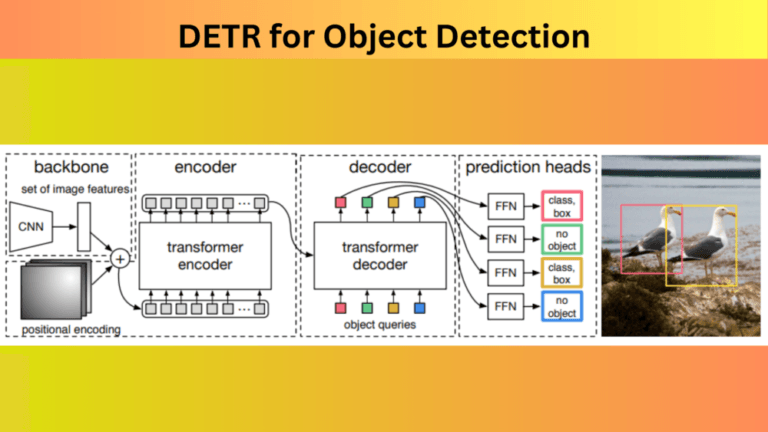
DINO improved the original DETR architecture significantly.
It delivers state-of-the-art detection performance across many benchmark datasets.
Strengths
- Exceptional accuracy
- Better training convergence
- Strong small-object detection
Ideal Applications
- Research
- Medical imaging
- Satellite imagery
- Precision manufacturing
Trade-Off
Requires more computational resources than YOLO models.
5. EfficientDet – Best for Resource-Constrained Deployments
EfficientDet remains highly relevant because of its efficiency.
It combines:
- EfficientNet backbone
- BiFPN architecture
- Compound scaling
Benefits
- Small model size
- Low hardware requirements
- Excellent mobile deployment
Best Applications
- Smartphones
- IoT devices
- Embedded systems
- Edge AI
Organizations seeking cost-effective deployment still benefit from EfficientDet.
6. Faster R-CNN – The Reliable Industry Standard
Although newer architectures have emerged, Faster R-CNN continues to serve as a benchmark detector.
Advantages
- High accuracy
- Mature ecosystem
- Strong community support
Common Uses
- Academic research
- Medical applications
- High-precision detection tasks
Limitation
Slower than YOLO and RT-DETR.

7. CenterNet2 – Anchor-Free Detection Excellence
CenterNet2 advances anchor-free object detection.
Instead of relying on predefined anchors, it identifies object centers directly.
Benefits
- Simpler architecture
- Better generalization
- Reduced hyperparameter tuning
Applications
- Autonomous driving
- Industrial inspection
- Smart surveillance
Anchor-free approaches continue gaining popularity in 2026.
8. YOLO-World – Open-Vocabulary Real-Time Detection
YOLO-World combines YOLO speed with open-vocabulary capabilities.
It bridges the gap between traditional object detectors and foundation models.
Advantages
- Real-time inference
- Text-guided detection
- Flexible deployment
Ideal For
- Robotics
- Visual search
- Dynamic environments
YOLO-World is becoming one of the most exciting innovations in computer vision.

9. OWL-ViT – Foundation Model-Based Detection
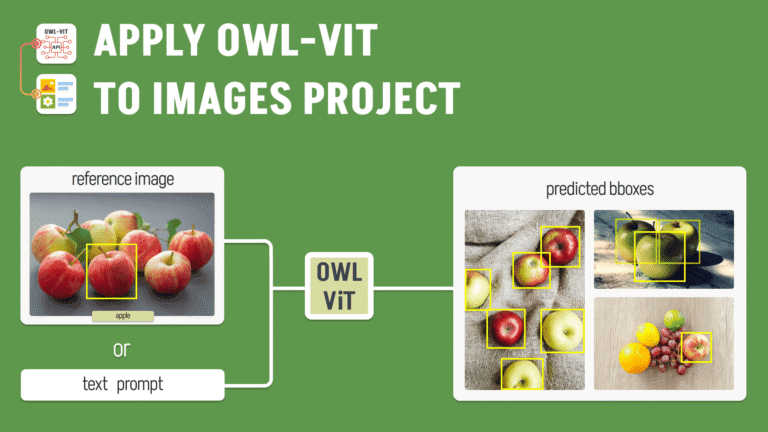
OWL-ViT leverages vision transformers and language understanding.
It can recognize thousands of object categories without task-specific retraining.
Benefits
- Zero-shot detection
- Flexible recognition
- Strong generalization
Applications
- Research
- Enterprise AI
- Advanced robotics
Foundation models like OWL-ViT are redefining object detection capabilities.
10. Segment Anything Model (SAM 2) for Detection and Segmentation
While primarily a segmentation model, SAM 2 increasingly supports detection workflows.
Why It Matters
Traditional detectors provide bounding boxes.
SAM 2 provides:
- Precise object masks
- Interactive segmentation
- Better visual understanding
Use Cases
- Medical imaging
- Autonomous systems
- Content generation
- Geospatial analysis
Many organizations combine SAM 2 with object detectors for enhanced performance.

Comparison of Top Object Detection Models in 2026
| Model | Accuracy | Speed | Real-Time | Open Vocabulary | Edge Deployment |
|---|---|---|---|---|---|
| YOLOv12 | Excellent | Excellent | Yes | Limited | Excellent |
| RT-DETR | Excellent | Very High | Yes | No | Good |
| Grounding DINO | Excellent | Moderate | Limited | Yes | Moderate |
| DINO-DETR | Outstanding | Moderate | Limited | No | Moderate |
| EfficientDet | Good | High | Yes | No | Excellent |
| Faster R-CNN | Excellent | Moderate | No | No | Moderate |
| CenterNet2 | Very Good | High | Yes | No | Good |
| YOLO-World | Excellent | High | Yes | Yes | Good |
| OWL-ViT | Excellent | Moderate | Limited | Yes | Moderate |
| SAM 2 | Outstanding | Moderate | Partial | Yes | Moderate |
Emerging Trends in Object Detection for 2026
Foundation Models
Large vision foundation models are transforming detection systems.
Open-Vocabulary Detection
Models increasingly recognize unseen objects through language prompts.
Edge AI
More models are optimized for deployment on:
- Mobile devices
- Cameras
- Drones
- IoT hardware
Multimodal AI
Vision and language are becoming tightly integrated.
Self-Supervised Learning
Reduced dependency on manually annotated datasets.
How to Choose the Right Object Detection Model
Choose YOLOv12 If
- Speed is critical
- Real-time performance is required
- Edge deployment is important
Choose RT-DETR If
- You need transformer accuracy
- Real-time performance matters
Choose Grounding DINO If
- Open-vocabulary detection is required
- Dynamic object categories exist
Choose EfficientDet If
- Budget and hardware are limited
- Mobile deployment is required
Choose SAM 2 If
- Pixel-level understanding is important
- Segmentation is required
The Role of High-Quality Data Annotation
Even the best object detection model depends on high-quality training data.
Organizations building custom detection systems require:
- Bounding box annotation
- Polygon annotation
- Semantic segmentation
- Instance segmentation
- Quality assurance
Professional data annotation providers help improve model performance by ensuring accurate and consistent training datasets.
Proper annotation often contributes more to final accuracy than switching between model architectures.
Conclusion
Object detection technology has reached an exciting stage in 2026. Traditional CNN architectures, transformer-based detectors, foundation models, and multimodal systems now coexist, giving organizations more options than ever before.
For real-time applications, YOLOv12 and RT-DETR remain leading choices. For open-world recognition, Grounding DINO, YOLO-World, and OWL-ViT provide unprecedented flexibility. Meanwhile, SAM 2 continues to push the boundaries of visual understanding through advanced segmentation capabilities.
The best object detection model ultimately depends on your specific use case, hardware constraints, deployment environment, and business objectives. Organizations that combine cutting-edge models with high-quality annotated datasets will be best positioned to build reliable, scalable, and accurate computer vision systems in the years ahead.
Frequently Asked Questions (FAQ)
What is the best object detection model in 2026?
YOLOv12 is widely considered one of the best overall object detection models due to its balance of speed, accuracy, and deployment flexibility. RT-DETR is also a leading contender for transformer-based real-time detection.
Which object detection model is best for real-time applications?
YOLOv12 and RT-DETR are among the top choices for real-time computer vision systems because they offer low latency and high frame rates.
What is open-vocabulary object detection?
Open-vocabulary object detection allows AI models to detect objects using natural language descriptions rather than fixed predefined classes.
Is Grounding DINO better than YOLO?
Grounding DINO excels at open-vocabulary detection and language-guided recognition, while YOLO generally provides faster real-time performance.
Which model is best for edge devices?
EfficientDet and YOLOv12 are excellent choices for edge AI deployments because of their lightweight architectures and efficient inference.
What is the difference between object detection and image segmentation?
Object detection identifies objects using bounding boxes, while segmentation provides pixel-level outlines of objects for more detailed analysis.
Can object detection models work without large datasets?
Foundation models such as Grounding DINO and OWL-ViT can perform zero-shot or few-shot detection, reducing dependence on large task-specific datasets.
Why is data annotation important for object detection?
Accurate annotation ensures that object detection models learn correct object boundaries and classifications, directly improving model accuracy and reliability.