Introduction
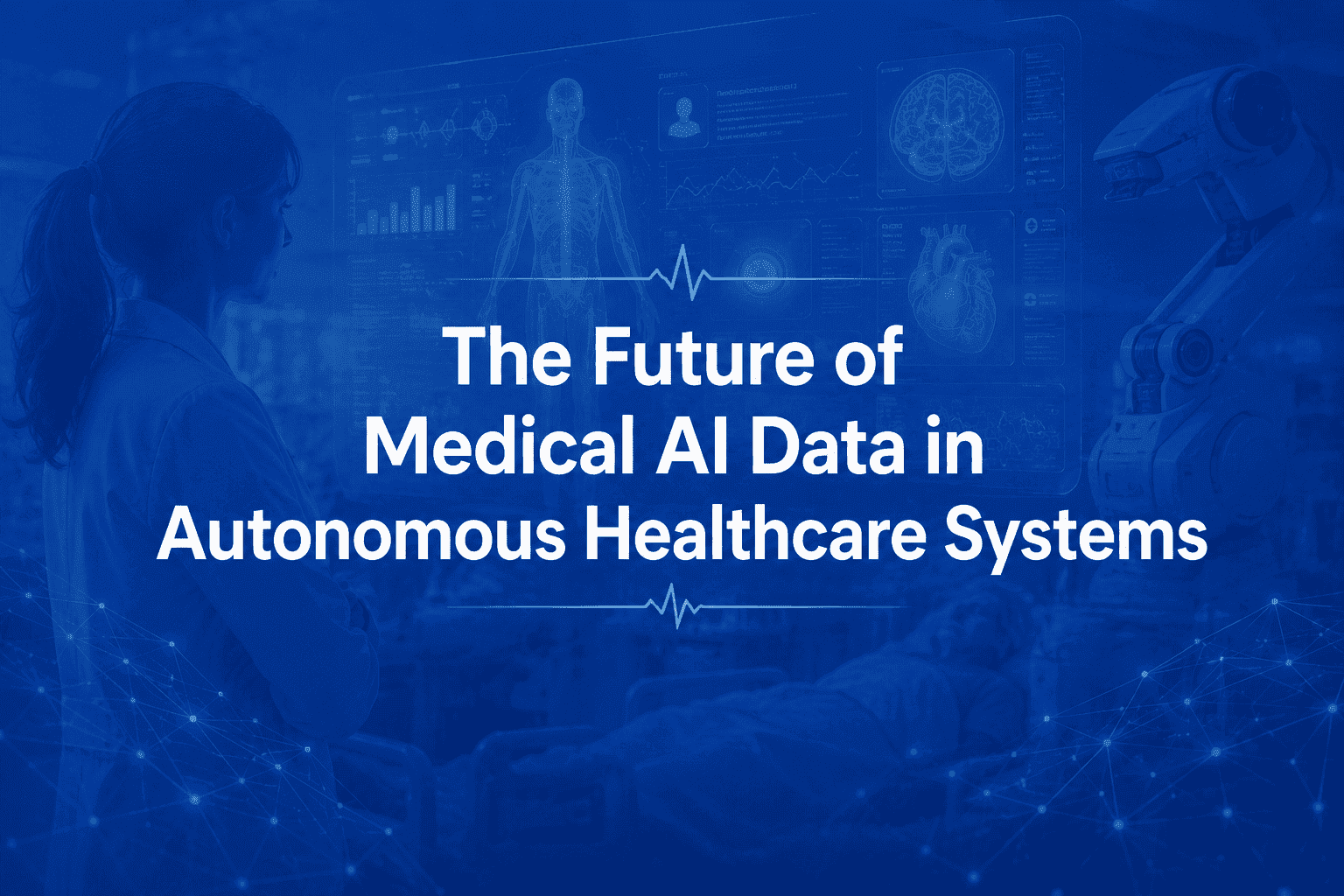
Healthcare is rapidly shifting from traditional digital systems toward intelligent, data-driven ecosystems powered by Artificial Intelligence. At the core of this transformation lies medical AI data, which fuels everything from disease detection and patient monitoring to predictive analytics and autonomous decision-making.
In 2026, we are entering a new phase known as autonomous healthcare systems, where AI is no longer limited to assisting clinicians but is increasingly capable of performing complex medical tasks with minimal human intervention. These systems depend on vast, high-quality, and continuously evolving datasets that combine medical imaging, clinical records, lab results, and real-time patient data.
As hospitals and healthcare providers adopt AI at scale, the quality, structure, and governance of medical data have become more important than ever. Without reliable data, even the most advanced AI models fail to deliver safe and accurate outcomes. This makes medical AI data not just a technical requirement, but a foundational pillar of modern healthcare innovation.
What Is Medical AI Data?
Medical AI data refers to structured and unstructured healthcare information used to train machine learning and deep learning models. It includes:
- Medical imaging (CT, MRI, X-ray, ultrasound)
- Clinical text (doctor notes, discharge summaries)
- Electronic health records (EHR)
- Lab results and diagnostic reports
- Pathology slides
- Physiological signals (ECG, EEG, vitals)
- Genomic and biomarker data
This data is used to build systems that can assist or fully automate tasks such as diagnosis, triage, treatment planning, and monitoring.
What Are Autonomous Healthcare Systems?
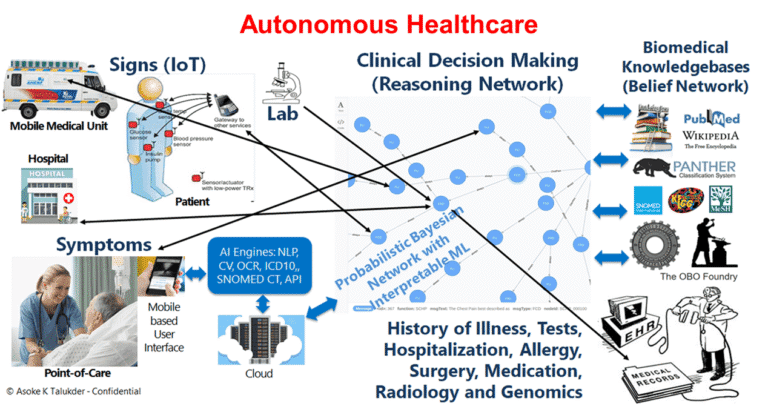
Autonomous healthcare systems are AI-powered environments capable of performing healthcare-related tasks with minimal human intervention.
These systems can:
- Detect diseases from imaging data
- Recommend treatments based on patient history
- Monitor patient conditions in real-time
- Predict health risks before symptoms appear
- Support surgical procedures using robotic systems
- Automate administrative and clinical workflows
In advanced implementations, AI systems work alongside healthcare professionals or operate independently under strict regulatory frameworks.
The Role of Data in Autonomous Healthcare
The success of autonomous healthcare systems depends entirely on data quality. Poor data leads to incorrect predictions, while high-quality data leads to life-saving accuracy.
Key roles of medical AI data include:
1. Training Intelligent Diagnostic Models
AI systems learn to detect diseases such as cancer, cardiovascular conditions, and neurological disorders through annotated datasets.
2. Enabling Predictive Healthcare
Historical patient data allows AI models to predict disease risks before symptoms appear.
3. Supporting Clinical Decision-Making
AI systems analyze patient records to recommend personalized treatments.
4. Powering Real-Time Monitoring
Wearable devices generate continuous data streams for AI-based monitoring systems.
Evolution of Medical AI Data
Phase 1: Manual Data Collection
- Paper records
- Limited digitization
- Slow and error-prone systems
Phase 2: Digital Healthcare Systems
- Electronic Health Records (EHR)
- Structured hospital databases
- Early AI experiments
Phase 3: AI-Assisted Data Annotation
- Computer vision tools
- NLP-assisted labeling
- Human-in-the-loop systems
Phase 4: Agentic AI Healthcare Systems (2026+)
- AI agents manage data collection
- Automated annotation pipelines
- Continuous learning systems
- Real-time dataset optimization
How AI Agents Are Transforming Medical Data
AI agents are becoming a core part of medical data pipelines.
They can:
- Automatically label medical images
- Detect annotation errors in datasets
- Standardize clinical terminology
- Validate dataset consistency
- Identify missing or biased data
- Improve dataset quality over time
Instead of static datasets, healthcare AI now relies on living datasets that evolve continuously.
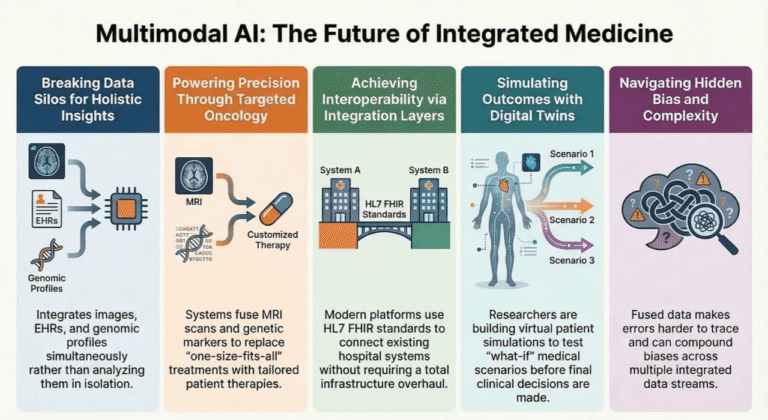
Multimodal Medical AI Data: The Future Standard
Autonomous healthcare systems require multimodal datasets, combining:
- Imaging data (radiology, pathology)
- Text data (clinical notes)
- Audio data (doctor-patient conversations)
- Sensor data (wearables, ICU monitors)
- Genomic data (DNA, biomarkers)
Multimodal AI allows systems to understand patients holistically rather than relying on a single data source.
Key Challenges in Medical AI Data
Despite rapid advancements, several challenges remain:
1. Data Privacy and Security
Healthcare data is highly sensitive and must comply with strict regulations such as HIPAA and GDPR.
2. Data Quality and Consistency
Inconsistent labeling or poor-quality annotations can lead to incorrect diagnoses.
3. Bias in Medical Datasets
If datasets are not diverse, AI models may perform poorly across populations.
4. Limited Access to Data
Hospitals often restrict data sharing due to privacy concerns.
5. Complex Annotation Requirements
Medical data requires expert-level annotation, especially in radiology and pathology.
The Rise of Synthetic Medical Data
To address data scarcity, synthetic medical data is becoming increasingly important.
Synthetic data can:
- Simulate rare diseases
- Enhance dataset diversity
- Protect patient privacy
- Accelerate model training
However, synthetic data must be carefully validated to ensure clinical relevance.
Future Trends in Medical AI Data
1. Fully Autonomous Data Pipelines
AI systems will collect, annotate, validate, and optimize datasets without human intervention.
2. Real-Time Data Learning
Healthcare AI will continuously learn from live patient data streams.
3. AI-Generated Clinical Insights
Systems will not only analyze data but also propose medical hypotheses.
4. Personalized Medicine at Scale
AI will tailor treatments based on individual genetic and medical profiles.
5. Global Medical Data Networks
Secure, federated systems will allow hospitals worldwide to collaborate without sharing raw patient data.
Human + AI Collaboration Will Remain Essential
Even in highly autonomous systems, human experts remain critical.
Doctors, radiologists, and medical annotators will:
- Validate AI predictions
- Handle complex cases
- Oversee ethical decisions
- Ensure clinical safety
The future is not full replacement—it is intelligent collaboration.
How Companies Like SO Development Fit In
Organizations like SO Development play a key role in building high-quality medical AI datasets through:
- Expert medical data annotation
- AI-assisted labeling workflows
- Human-in-the-loop validation
- Multimodal dataset creation
- Scalable data operations for enterprise AI systems
These capabilities help bridge the gap between raw medical data and production-ready AI systems.
Conclusion
The future of healthcare is being shaped by the quality and intelligence of its data. As autonomous healthcare systems continue to evolve, medical AI data will remain the critical foundation enabling accurate diagnosis, predictive care, and intelligent clinical decision-making.
We are moving toward a world where AI systems can analyze multimodal medical information in real time, support doctors with highly precise insights, and even automate parts of the healthcare workflow. However, this progress depends heavily on continuous improvements in data quality, annotation accuracy, privacy protection, and ethical governance.
While AI will significantly enhance healthcare efficiency and capabilities, human expertise will continue to play a vital role in ensuring safety, validating complex cases, and guiding ethical decisions. The most successful healthcare systems of the future will be those that combine advanced AI technologies with expert human oversight.
Ultimately, organizations that invest today in building strong, scalable, and high-quality medical AI datasets will be the ones leading the next generation of autonomous healthcare innovation.
Frequently Asked Questions (FAQs)
1. What is medical AI data in autonomous healthcare systems?
Medical AI data is structured healthcare information used to train AI models, including medical images, electronic health records, clinical notes, lab results, and physiological signals. In autonomous healthcare systems, this data powers diagnosis, prediction, and decision-making processes.
2. What are autonomous healthcare systems?
Autonomous healthcare systems are AI-driven platforms capable of performing healthcare tasks such as disease detection, risk prediction, patient monitoring, and treatment recommendations with minimal human intervention.
3. Why is data so important in healthcare AI?
Data is the foundation of all healthcare AI systems. High-quality medical data ensures accurate diagnoses, reliable predictions, and safe clinical decisions. Poor-quality data can lead to incorrect or unsafe outcomes.
4. What types of data are used in medical AI systems?
Medical AI systems use:
- Medical imaging (CT, MRI, X-ray, ultrasound)
- Clinical text and doctor notes
- Electronic health records (EHR)
- Lab reports
- Genomic data
- Physiological signals like ECG and EEG
5. How does AI improve healthcare data usage?
AI improves healthcare data by automating annotation, detecting patterns, cleaning datasets, identifying errors, and enabling faster processing of large-scale medical information.
6. What is multimodal medical AI data?
Multimodal medical AI data combines different types of healthcare data—such as images, text, audio, and sensor data—to give AI systems a complete understanding of patient conditions.
7. What are the main challenges in medical AI data?
Key challenges include:
- Data privacy and compliance (HIPAA, GDPR)
- Data quality and consistency issues
- Limited access to medical datasets
- Bias in healthcare data
- Complex annotation requirements
8. Will AI replace doctors in autonomous healthcare systems?
No. AI will not replace doctors. Instead, it will assist them by handling repetitive tasks, improving diagnostic accuracy, and providing data-driven insights, while doctors make final clinical decisions.
9. What is the future of medical AI data?
The future includes real-time data processing, autonomous AI agents managing datasets, multimodal learning systems, synthetic data generation, and fully integrated intelligent healthcare ecosystems.
10. How do companies like SO Development contribute to medical AI data?
Companies like SO Development support healthcare AI by providing high-quality data annotation, AI-assisted labeling, human-in-the-loop validation, and scalable dataset creation for medical imaging, NLP, and multimodal healthcare applications.