Introduction
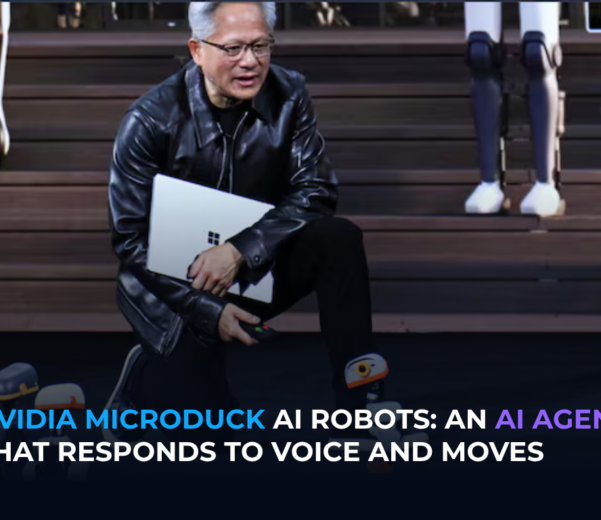
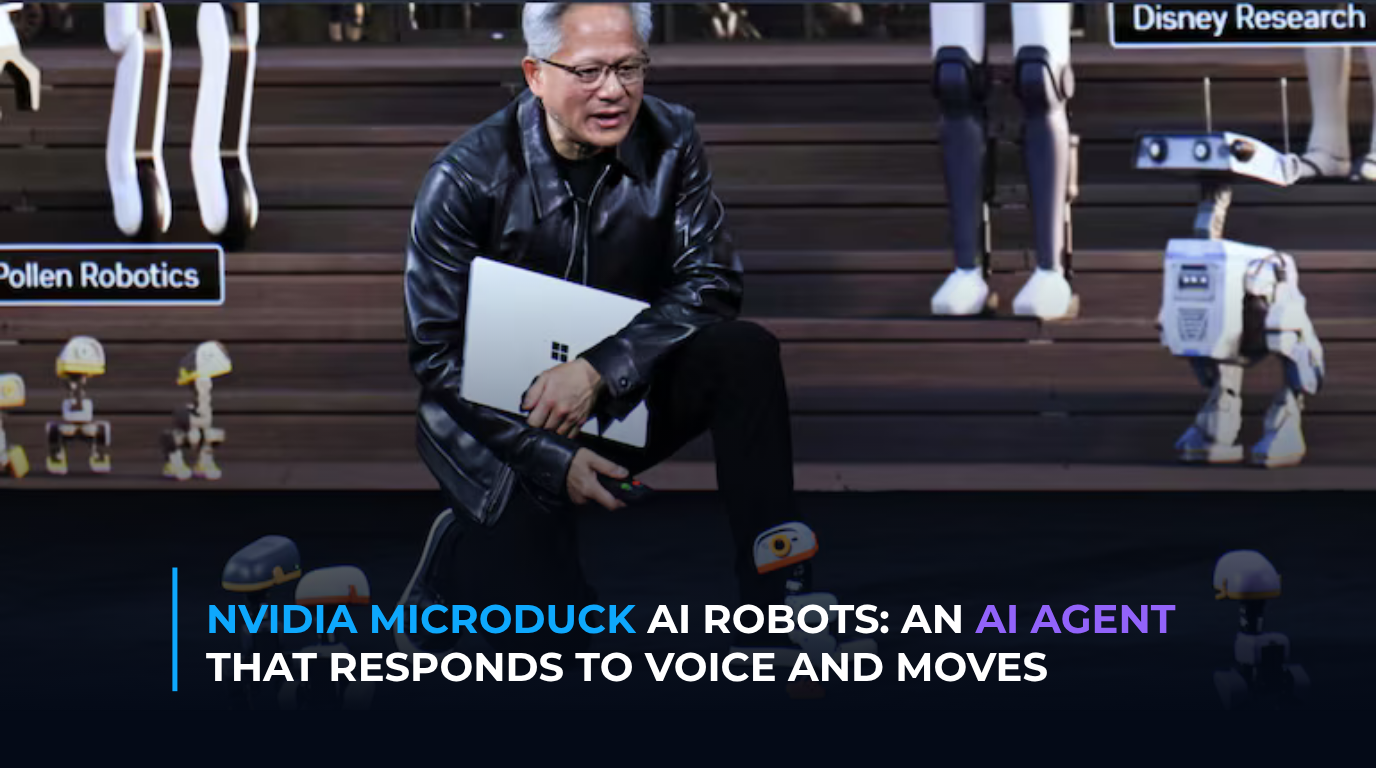
Nvidia’s recent events featured an amazing demonstration of small, two-legged robots known as Microducks. Standing just 25 centimeters tall, these robotic companions stand out for their ability to respond instantly to human voice commands and coordinate their actions in real time.
The tech world is undergoing a major transformation as artificial intelligence moves beyond digital screens and software systems into the real physical environment. This live embodiment of technology, known as Physical AI, combines complex generative capabilities with mechanical body movement, paving the way for a new generation of smart machines that can understand their environment and interact with humans directly and immediately.
“Every company in Europe will become an AI company”
Jensen Huang, CEO of Nvidia
What are Physical AI and Nvidia Microduck AI Robots?
Physical AI represents the next generation of smart technology, a complete fusion of advanced artificial intelligence models and precision mechanical engineering (mechatronics). During this transformation, Nvidia Microduck AI Robots have emerged as the prime example of giving machines the ability to understand the physical world, process spoken language, and perform physical movements that adapt to the changing environment around them.
Key Insights
- Official Launch Date: Nvidia officially presented the AI-powered Microduck robots during a live technology demonstration on October 23, 2026.
- Estimated Price: The developmental and production value for these advanced demonstration devices is estimated at around $399.
- Jensen Huang’s Vision: Nvidia’s CEO stated that “Every company in Europe will become an AI company”, emphasizing Europe’s strength in precision engineering and mechatronics.
- Instant Voice Processing: The 25 cm tall bipedal robots execute movement commands such as sitting, standing, and napping within milliseconds using local edge computing without relying on the cloud.
Real-Time Voice Response and Motor Control Capabilities in Nvidia AI Robots
Advanced nvidia ai robots serve as a practical example of integrating Large Language Models (LLMs) with mechanical motor control software. During the live demonstration presented by Jensen Huang, these small units (standing just 25 cm tall) executed multiple spoken commands, such as sitting, standing, and pretending to nap, in real-time.
The secret behind this performance lies not only in understanding voice commands, but also in the speed of converting heard text into electromechanical signals that drive the bipedal limbs to move smoothly. This success reflects the potential for building personal robotic devices that can coexist and interact with humans naturally and directly. For developers interested in comparing processing speeds and pricing models for efficient workflows, reviewing Gemini 4 Argon Review: Performance, Pricing, and Model Comparison provides valuable insights.
Edge Computing Architecture and Visual Perception
To ensure the robots operate efficiently even in environments lacking fast internet connections, modern Nvidia Microduck AI Robots are equipped with Edge Computing technologies. This architecture allows data processing to happen directly inside the device rather than sending it to remote cloud servers, offering instant responses to commands and ensuring maximum privacy and independence.
Furthermore, the Microduck units demonstrated high navigation and pathfinding skills thanks to Computer Vision algorithms. This technology enables the robots to explore their surroundings and avoid obstacles on stage while maintaining their group formation, proving the success of the mathematical models responsible for visual tracking and smart navigation. When evaluating how decision-making mechanisms function under various API constraints, you might also find the analysis in OpenAI Decisions API vs TypeSafe Jev: Full Guide quite relevant.
Physical Infrastructure and Data Acceleration: Vera Rubin & DSX POD
Operating and training smart robotic systems requires extremely powerful infrastructure. In this context, Nvidia unveiled its DSX POD units designed for factories and industrial settings, relying entirely on the advanced Vera Rubin architecture. Furthermore, Nvidia continues to expand its broader robotics ecosystem through initiatives detailed in the official Nvidia Advances Isaac Platform for General-Purpose Robotics.
- Factory Pre-fabrication: Data center modules are pre-engineered and built inside factories for easy shipping and installation.
- Record Time Reduction: These structural solutions reduced the time needed to build and deploy data centers in industrial facilities from 6 full months to just 2 weeks.
This massive jump in infrastructure gives factories and companies the ability to process data streams coming from robotics and Physical AI devices at ultra-high speeds and unmatched operational efficiency. To read about ultra-fast processing models that support real-time application pipelines, explore the Claude Haiku 5.5 Review: Is it Truly the Cheapest and Fastest?.
Release Date and Market Availability & Nvidia Microduck Price
Although these robots were officially unveiled on October 23, 2026, Nvidia confirmed that this showcase falls under the category of a Research Demonstration rather than a commercial consumer product available for direct sale in stores right now.
Regarding the expected nvidia microduck price, the estimated development and operating cost of these devices is around $399. However, the company has not yet announced specific timelines for consumer commercial availability, as these field tests aim to guide developers toward the future of autonomous robotic platforms and the expansion of embodied AI applications.
Final Thoughts
Recent demonstrations of Nvidia Microduck AI Robots prove that the Physical AI sector is no longer just a theoretical concept, but a rapidly forming commercial and technological asset. With Nvidia’s massive investments reaching nearly $10 billion in the European tech ecosystem, alongside the development of ultra-fast infrastructure, the door is wide open for a new era where vital industries rely on robotic assistants and smart agents capable of both thinking and moving.
Frequently Asked Questions (FAQ)
Q1: What is the nvidia microduck price, and are these robots available for purchase?
The estimated development and operating cost of these devices is around $399. However, they were presented as a research demonstration by Nvidia on October 23, 2026, and have not yet been released as a commercial consumer product for direct sale.
Q2: What makes nvidia ai robots different from traditional robots?
They stand out by connecting Large Language Models (LLMs) directly to motor control systems. This enables them to respond to human voice commands smoothly in less than a second, perform synchronized group movements, and avoid obstacles using local edge computing without needing an internet connection.
Q3: What is meant by Physical AI in Nvidia Microduck AI Robots?
Physical AI is a branch of artificial intelligence that merges advanced machine learning algorithms with precision mechanical engineering (mechatronics). This allows machines and modern Nvidia Microduck AI Robots to understand the physical world and interact with it with lifelike movement and autonomy.