Introduction
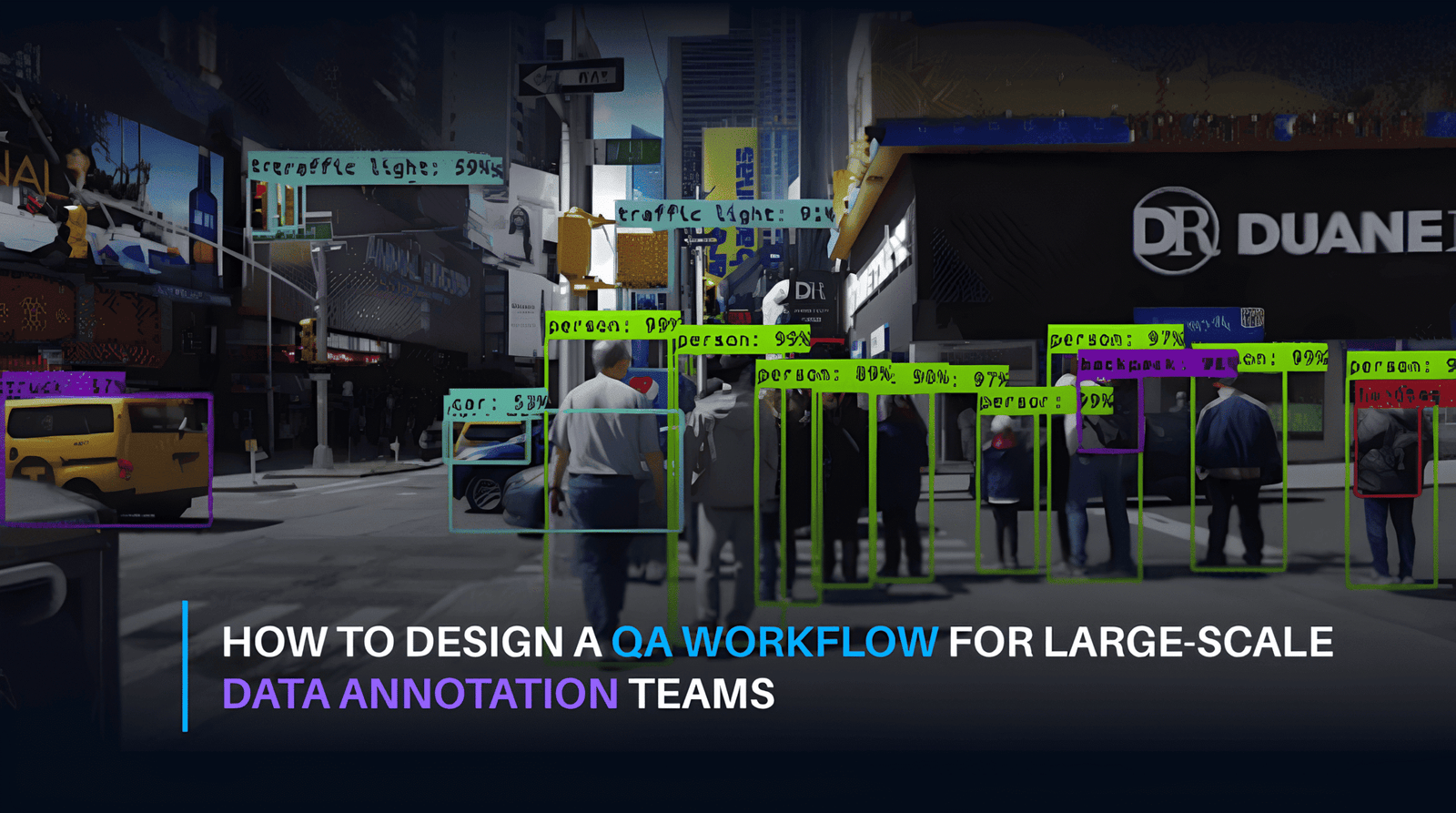
AI and machine learning systems rely heavily on labeled data. Mastering scaling data annotation operations requires a balance between speed and quality control. Focusing on improving data annotation accuracy is crucial when scaling ML operations. No matter how advanced your algorithms are, training data quality ultimately limits overall performance.
Getting high-quality training data training data in early stages or pilot batches is usually manageable. The real challenge starts when you scale up to production volumes. At this stage, most teams struggle with quality loss as data volume increases. This rush to meet tight deadlines causes teams to overlook edge cases.
Managing quality is straightforward with a small team of 3 annotators. However, as you scale to 30 or 50 annotators, individual understandings of the guidelines diverge. This leads to inconsistent data that directly degrades model accuracy.
During annotation projects, edge cases inevitably emerge that force guidelines to evolve. The core challenge is ensuring every annotator receives and understands updates simultaneously. This prevents half the team from working on outdated rules.
Furthermore, labeling is mentally demanding, and handling thousands of repetitive samples causes fatigue, letting small errors slip through and requiring proactive oversight of team well-being.
Does scaling mean you have to compromise on accuracy? Not at all. Leading annotation teams show that you can expand data volume while maintaining, and even improving, quality standards. The key is building a workflow and process designed specifically to protect quality as you grow.
Maintaining AI training data quality requires strict compliance with workflow guidelines. This article shows how data annotation teams can scale their operations from hundreds to millions of labels without sacrificing accuracy.
Defining high-quality training data
In data annotation, quality isn’t just about avoiding individual errors; it’s about minimizing annotation overhead, the time, effort, and resources spent to maintain consistency, accuracy, and reliability across your entire dataset. High-quality data ensures that labels remain consistent across different team members and align perfectly with model requirements, directly driving the overall success of AI/ML projects.
Read Also: LiDAR Annotation Quality Checklist for Autonomous Vehicles
Quality Assurance Workflow
Quality assurance shouldn’t happen only after the work is done. Instead, it must be integrated into every stage of the data annotation process. Especially when scaling to large volumes of datasets, building a flexible workflow is essential, Here is how to design a QA workflow that maintains quality at scale:
- Clear Instructions Before Project Launch
Most quality issues stem from unclear instructions at the start. Protecting quality begins with creating a comprehensive guide that covers basic definitions, clear examples, and explicit steps for handling ambiguous cases. Setting measurable standards for acceptable work upfront prevents costly rework later.
- Organizing Workflow Efficiency
Removing administrative and technical bottlenecks boosts your team’s ability to handle larger data volumes. This is achieved by clearly defining responsibilities, using real-time tracking, and applying smart filtering, routing complex cases to human reviewers while letting straightforward entries pass through automatically.
- Testing Workflows on Small Samples
Jumping straight into large-scale annotation is a major risk. A better approach is testing your workflow on small data batches first. These limited samples expose gaps in guidelines and surface tricky edge cases early, allowing you to establish solid quality baselines before committing to full production.
- Multi-Tier Annotation QA Process
Implementing a structured, multi-tier annotation QA process is essential for maintaining high dataset accuracy at scale. By combining automated validation checks with senior reviewer spot-checks and edge-case consensus reviews, teams can eliminate annotation errors before they reach the model training stage. This layered approach ensures consistent quality control without slowing down overall throughput.
- Continuous Quality Monitoring
Delaying data audits until a full batch is finished leads to wasted time and budget. Modern QA systems rely on continuous monitoring through daily sample checks, tracking annotator agreement rates, identifying recurring error patterns, and triggering immediate alerts if quality drops so issues can be resolved right away.
- Fast Communication and Feedback Loops
Connecting annotators directly with reviewers prevents individual mistakes from turning into team-wide issues. Immediate feedback allows annotators to adjust their approach right away while clarifying confusing concepts using real-world examples encountered on the job.
- Continuous Guideline Updates
As datasets grow, unexpected edge cases always emerge. Guidelines and instructions should be treated as living documents that evolve based on issues uncovered during daily reviews. This transforms QA from a static inspection checkpoint into an adaptive environment for continuous learning.
Read Also: How to Choose a Data Annotation Partner for Computer Vision Projects?
Final Thoughts
Managing scaling data annotation efficiently requires shifting from end-of-process checks to an integrated, multi-stage QA workflow. By combining clear instructions, batch validation, automated checks, expert supervision, and real continuous feedback, teams can scale from hundreds to millions of labels while maintaining high accuracy and consistency.
We proved this approach by scaling to over 100 specialists through a two week pilot and three tier QA structure, achieving 98.6% precision. Automated tracking cut manual work by 40%, allowing our team to focus on complex edge cases and deliver Level 4 ADAS data with zero critical errors while saving our client weeks of engineering time
If you are preparing to scale your data pipeline, we are here to streamline the process. Get in touch with our experts today to see how we can fuel your AI projects with high-quality training data
Frequently Asked Questions (FAQ)
Q: Why should QA be embedded into the annotation process instead of done at the end?
Catching errors early prevents systemic mistakes from multiplying across large datasets and avoids expensive, time-consuming rework.
Q: What is the main cause of quality drops when scaling annotation teams?
Quality drops mainly stem from ambiguous guidelines, inconsistent interpretations among new annotators, and fatigue caused by high volumes.
Q: How do small pilot batches help maintain quality at scale?
Pilot batches expose hidden edge cases and guideline gaps early, establishing solid quality baselines before committing to full production.