
Introduction
Object detection has become one of the most important tasks in modern computer vision. From autonomous driving and medical imaging to surveillance systems and drone analytics, machines are increasingly expected to recognize objects in complex visual environments. However, while detecting large and clear objects has reached impressive accuracy levels, small object detection remains one of the most difficult problems in artificial intelligence.
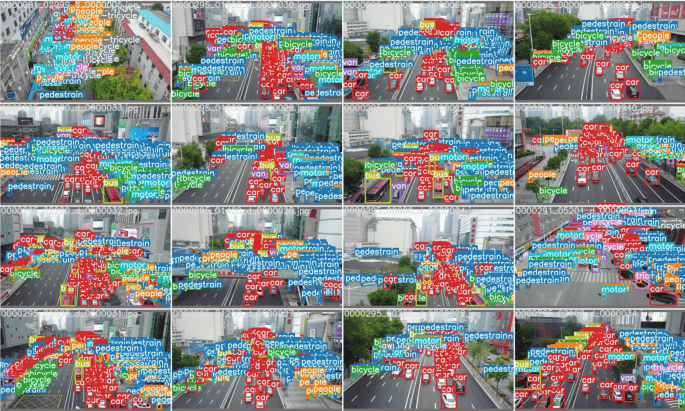
Small objects — such as distant pedestrians, tiny defects in manufacturing, or small tumors in medical scans — often occupy only a few pixels in an image. Despite their size, these objects frequently carry critical information. Missing them can lead to serious consequences, making small object detection an active and important research area.
This article explores what small object detection is, why it is challenging, the techniques used to improve performance, real-world applications, and emerging trends shaping the future.
What Is Small Object Detection?
Small object detection refers to identifying and localizing objects that occupy a very small portion of an image.
In many benchmarks, objects are categorized based on their pixel area:
- Small objects: typically < 32×32 pixels
- Medium objects: 32×32 to 96×96 pixels
- Large objects: > 96×96 pixels
Unlike large objects, small objects contain limited visual information, making it harder for deep learning models to extract meaningful features.
Examples include:
- Pedestrians far from a self-driving car
- Tiny vehicles in aerial imagery
- Micro-defects in industrial inspection
- Small animals in wildlife monitoring
- Lesions in medical scans
Why Small Object Detection Is Difficult
1. Limited Visual Information
Small objects contain fewer pixels, which means:
- Less texture
- Reduced shape details
- Higher sensitivity to noise
Important visual cues may disappear during image processing.
2. Feature Loss During Downsampling
Modern convolutional neural networks (CNNs) repeatedly reduce spatial resolution using pooling or strided convolutions. While this helps capture semantic information, it can completely eliminate small objects from deeper layers.
3. Class Imbalance
Datasets often contain far more background pixels than small object pixels. Models may learn to prioritize larger or more dominant objects.
4. Occlusion and Clutter
Small objects frequently appear:
- Partially hidden
- In dense scenes
- Against complex backgrounds
This increases false positives and missed detections.
5. Scale Variation
Objects may appear at vastly different sizes within the same image, making scale generalization difficult.
Key Techniques for Small Object Detection
Researchers and engineers have developed multiple strategies to address these challenges.
1. Feature Pyramid Networks (FPN)
Feature Pyramid Networks combine features from multiple layers of a CNN:
- Shallow layers → high spatial resolution
- Deep layers → strong semantic information
By merging both, models retain details necessary for detecting small objects.
Benefits:
- Multi-scale feature representation
- Improved detection accuracy
- Widely adopted in modern detectors
2. Multi-Scale Training and Testing
Images are resized to different scales during training.
This allows models to learn objects appearing at various resolutions.
Techniques include:
- Image pyramids
- Random resizing
- Scale jittering
3. Super-Resolution Techniques
Super-resolution models enhance image quality before detection by increasing pixel density.
Advantages:
- Recover fine details
- Improve feature extraction
- Boost performance in low-resolution scenarios
4. Attention Mechanisms
Attention modules help networks focus on relevant regions.
Examples:
- Spatial attention
- Channel attention
- Transformer-based attention
These mechanisms guide the model toward subtle visual cues.
5. Contextual Information Modeling
Small objects benefit heavily from surrounding context.
For example:
- A tiny pedestrian is likely on a road.
- A small boat appears on water.
Context-aware models analyze neighboring regions to improve predictions.
6. Anchor Optimization
Traditional detectors use predefined anchor boxes. For small objects:
- Smaller anchors are introduced
- Anchor density is increased
- Adaptive anchor learning is applied
This improves localization precision.
7. Transformer-Based Detection
Vision transformers capture long-range dependencies across images.
Advantages for small objects:
- Global context awareness
- Better feature relationships
- Reduced reliance on handcrafted anchors
Examples include DETR-style architectures and hybrid CNN-transformer models.
Popular Models Used for Small Object Detection
Several architectures are commonly adapted or optimized for detecting small objects:
- YOLO variants (YOLOv5, YOLOv8 with small-scale tuning)
- Faster R-CNN + FPN
- RetinaNet
- EfficientDet
- DETR and Deformable DETR
Each balances speed, accuracy, and computational cost differently.
Real-World Applications
Autonomous Driving
Detecting distant pedestrians, traffic signs, and cyclists early improves safety and reaction time.
Medical Imaging
Small anomaly detection enables early disease diagnosis, including:
- Tumor detection
- Microcalcifications in mammograms
- Cellular analysis
Aerial and Satellite Imaging
Used for:
- Vehicle monitoring
- Disaster response
- Military surveillance
- Environmental tracking
Industrial Inspection
Factories rely on detecting tiny defects such as:
- Surface cracks
- Micro scratches
- Assembly errors
Security and Surveillance
Identifying suspicious objects or individuals at long distances enhances monitoring systems.
Evaluation Metrics
Small object detection is typically evaluated using:
- mAP (mean Average Precision) across object sizes
- AP_Small (COCO benchmark metric)
- Precision–Recall curves
- IoU (Intersection over Union)
AP_Small specifically measures performance on small instances.
Current Challenges
Despite progress, several issues remain:
- High computational cost for multi-scale processing
- Sensitivity to image resolution
- Dataset limitations
- Real-time deployment constraints
- Generalization across environments
Future Trends
1. Foundation Vision Models
Large-scale pretrained vision models are improving generalization across object sizes.
2. Edge AI Optimization
Efficient small-object detectors designed for drones, mobile devices, and IoT systems.
3. Better Data Augmentation
Synthetic data and generative AI help create diverse small-object samples.
4. Hybrid CNN–Transformer Architectures
Combining local feature extraction with global reasoning is becoming the dominant approach.
5. Self-Supervised Learning
Reducing dependence on labeled datasets while improving robustness.
Best Practices for Practitioners
If you are building a small object detection system:
✅ Use higher input resolution
✅ Apply feature pyramids
✅ Tune anchor sizes carefully
✅ Include contextual modeling
✅ Use data augmentation heavily
✅ Evaluate using AP_Small metrics
✅ Balance speed vs accuracy requirements
Best Practices for Practitioners
If you are building a small object detection system:
✅ Use higher input resolution
✅ Apply feature pyramids
✅ Tune anchor sizes carefully
✅ Include contextual modeling
✅ Use data augmentation heavily
✅ Evaluate using AP_Small metrics
✅ Balance speed vs accuracy requirements
Conclusion
Small object detection represents one of the most challenging yet impactful areas of computer vision. While deep learning has significantly improved object detection overall, identifying tiny objects continues to demand specialized architectures, smarter training strategies, and better data handling.
As transformer models, foundation vision systems, and edge AI technologies evolve, small object detection is expected to become more accurate, efficient, and widely deployed across industries.
The ability to reliably detect what is barely visible to the human eye will unlock safer autonomous systems, earlier medical diagnoses, smarter surveillance, and more precise industrial automation — making small object detection a cornerstone of next-generation artificial intelligence.
Frequently Asked Questions (FAQ)
1. What is small object detection in computer vision?
Small object detection is a computer vision task focused on identifying and locating objects that occupy only a small number of pixels in an image. These objects typically contain limited visual information, making them harder for deep learning models to recognize compared to larger objects.
2. Why is small object detection difficult?
Small object detection is challenging because small objects:
- Contain fewer visual features
- Lose detail during image downsampling in neural networks
- Are often surrounded by cluttered backgrounds
- Appear at varying scales and distances
- Create class imbalance between object and background pixels
These factors reduce detection accuracy and increase false negatives.
3. What techniques improve small object detection accuracy?
Several techniques help improve performance, including:
- Feature Pyramid Networks (FPN)
- Multi-scale training and image resizing
- Super-resolution preprocessing
- Attention mechanisms
- Context-aware modeling
- Optimized anchor boxes
- Transformer-based detection architectures
Combining multiple approaches usually produces the best results.
4. Which models are best for small object detection?
Popular models adapted for small object detection include:
- YOLO (YOLOv5, YOLOv8)
- Faster R-CNN with FPN
- RetinaNet
- EfficientDet
- DETR and Deformable DETR
The best model depends on accuracy requirements, dataset size, and real-time constraints.
5. Where is small object detection used in real-world applications?
Small object detection is widely used in:
- Autonomous driving (distant pedestrians and vehicles)
- Medical imaging (tumor and lesion detection)
- Aerial and satellite imagery
- Industrial defect inspection
- Surveillance and security monitoring
- Wildlife tracking and environmental analysis
6. How does image resolution affect small object detection?
Higher image resolution generally improves small object detection because it preserves fine details. However, increasing resolution also raises computational cost and memory usage, requiring a balance between performance and efficiency.
7. What evaluation metrics are used for small object detection?
Common evaluation metrics include:
- Mean Average Precision (mAP)
- AP_Small (COCO benchmark metric)
- Precision and Recall
- Intersection over Union (IoU)
AP_Small specifically measures performance on small-sized objects.
8. Are transformers better than CNNs for detecting small objects?
Transformers can improve small object detection because they capture global context across an image. However, hybrid CNN–Transformer models often perform best by combining detailed local features with global reasoning.
9. How can datasets be improved for small object detection?
Datasets can be enhanced by:
- Adding more small-object annotations
- Using data augmentation techniques
- Applying synthetic data generation
- Balancing object size distribution
- Including diverse environments and lighting conditions
10. What is the future of small object detection?
Future developments are expected to include:
- Foundation vision models
- Self-supervised learning
- Edge AI optimization
- Real-time lightweight detectors
- Improved multi-scale and context-aware architectures
These advances will make detection systems more accurate and efficient across industries.