Introduction
Higher education is entering one of the most transformative periods in its history. Just as the internet redefined access to knowledge and online learning reshaped classrooms, Generative Artificial Intelligence (Generative AI) is now redefining how knowledge is created, delivered, and consumed.
Unlike traditional AI systems that analyze or classify data, Generative AI can produce new content — including text, code, images, simulations, and even research drafts. Tools powered by large language models are already assisting students with learning, supporting professors in course design, and accelerating academic research workflows.
Universities worldwide are moving beyond experimentation. Generative AI is rapidly becoming an essential academic infrastructure — influencing pedagogy, administration, research, and institutional strategy.
This article explores how Generative AI is transforming higher education, its opportunities and risks, and what institutions must do to adapt responsibly.
What Is Generative AI?
Generative AI refers to artificial intelligence systems capable of creating original outputs based on patterns learned from large datasets. These systems rely on advanced machine learning architectures such as:
Large Language Models (LLMs)
Diffusion models
Transformer-based neural networks
Multimodal AI systems
Examples of generative outputs include:
Essays and academic explanations
Programming code
Research summaries
Visual diagrams
Educational simulations
Interactive tutoring conversations
In higher education, this ability shifts AI from being a passive analytical tool into an active collaborator in learning and research.
Personalized Learning at Scale
One of the most powerful applications of Generative AI is personalized education.
Traditional classrooms struggle to adapt to individual learning speeds and styles. AI-powered systems can now:
Explain complex concepts in multiple ways
Adjust difficulty dynamically
Provide instant feedback
Generate customized practice exercises
Support multilingual learning
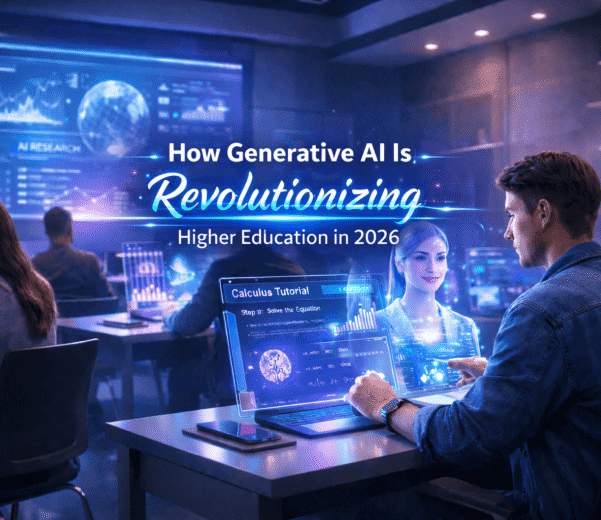
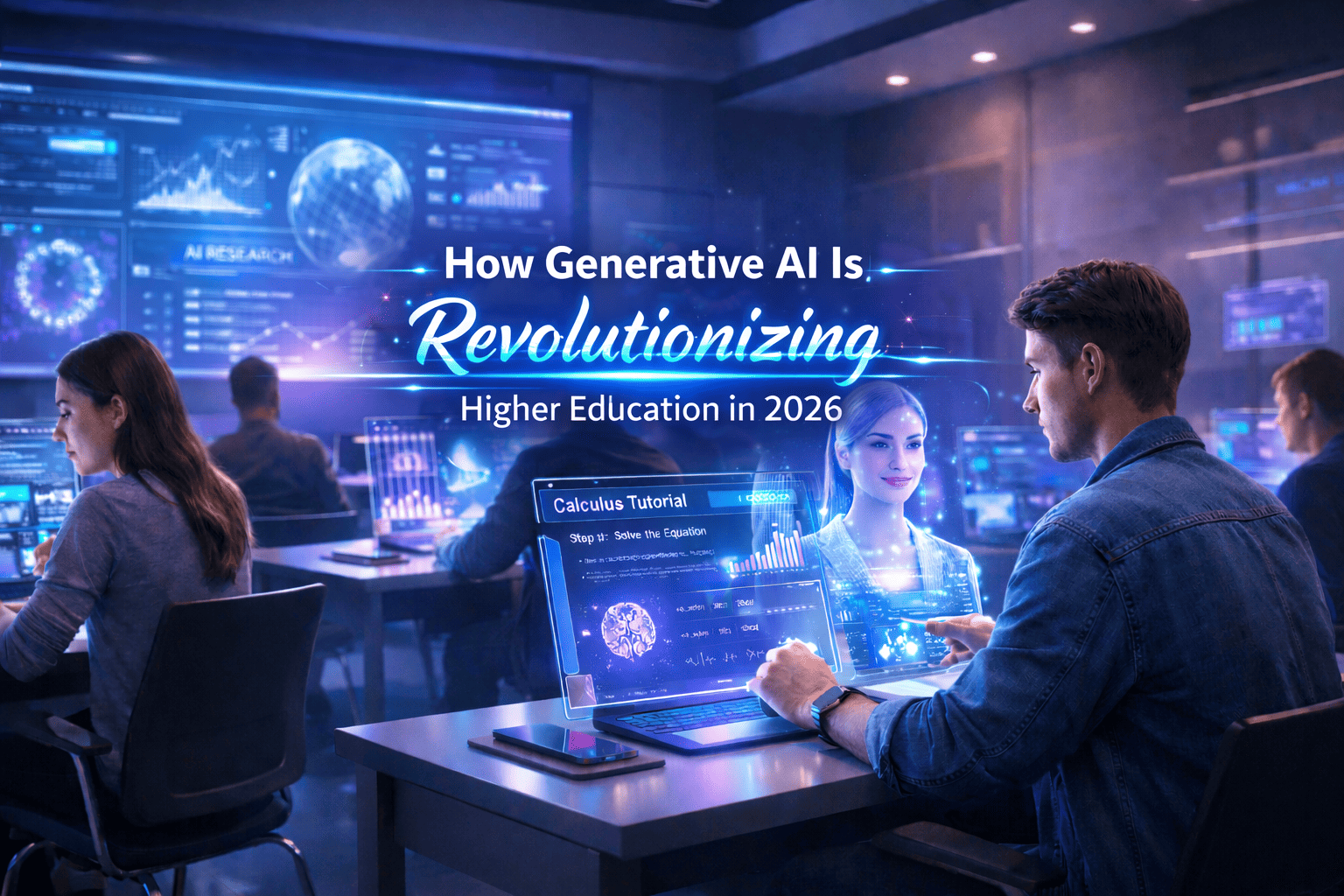
A student struggling with calculus, for example, can receive step-by-step explanations tailored to their understanding level — something previously impossible at scale.
Benefits for Students
24/7 academic assistance
Reduced learning gaps
Improved engagement
Increased confidence in difficult subjects
Generative AI effectively acts as a personal academic tutor available anytime.
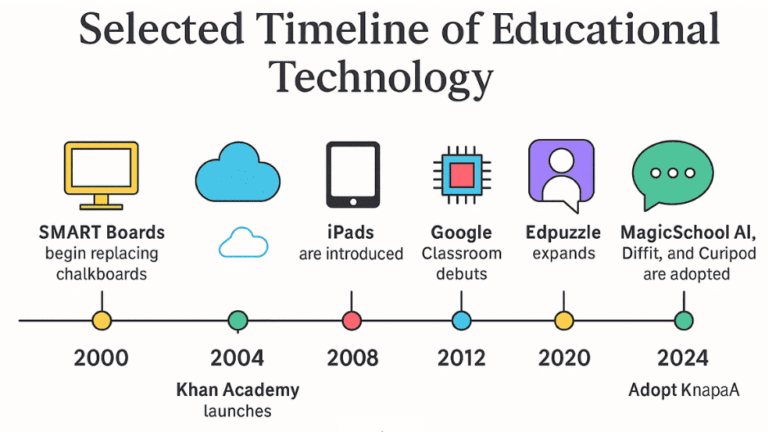
The Evolution of Technology in Higher Education
To understand the impact of Generative AI, it helps to view it within the broader evolution of educational technology:
| Era | Technology Impact |
|---|---|
| Pre-2000 | Digital libraries and basic computing |
| 2000–2015 | Learning Management Systems (LMS) and online courses |
| 2015–2022 | Data analytics and adaptive learning |
| 2023–Present | Generative AI and intelligent academic assistance |
While previous technologies improved access and efficiency, Generative AI changes something deeper — how knowledge itself is produced and understood.
Empowering Educators, Not Replacing Them
A common misconception is that AI will replace professors. In reality, Generative AI is emerging as a productivity amplifier.
Educators can use AI to:
Draft lecture materials
Create quizzes and assignments
Generate case studies
Design simulations
Summarize research papers
Translate learning content
This reduces administrative workload and allows instructors to focus on what matters most:
Mentorship
Critical discussion
Research supervision
Human-centered teaching
The role of educators is shifting from information delivery toward learning facilitation and intellectual guidance.
Revolutionizing Academic Research
Research is another domain experiencing rapid transformation.
Generative AI accelerates research workflows by helping scholars:
Conduct literature reviews faster
Summarize thousands of papers
Generate hypotheses
Assist with coding and data analysis
Draft early manuscript versions
For interdisciplinary research, AI can bridge knowledge gaps across domains, helping researchers explore unfamiliar fields more efficiently.
However, AI-generated research must always be validated by human expertise to maintain academic integrity.
AI-Assisted Writing and Academic Productivity
Writing is central to higher education, and Generative AI has dramatically changed the writing process.
Students and researchers now use AI tools for:
Brainstorming ideas
Structuring arguments
Improving clarity and grammar
Formatting citations
Editing drafts
When used responsibly, AI becomes a thinking partner, not a shortcut.
Universities increasingly encourage transparent AI usage policies rather than outright bans.

Administrative Transformation
Beyond classrooms and research, Generative AI is reshaping university operations.
Applications include:
Automated student support chatbots
Enrollment assistance
Academic advising systems
Curriculum planning analysis
Predictive student success modeling
Institutions can improve efficiency while providing faster and more personalized student services.
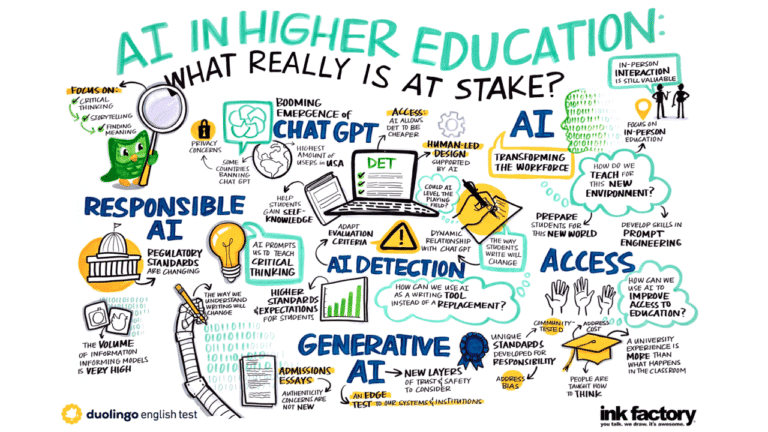
Ethical Challenges and Academic Integrity
Despite its benefits, Generative AI introduces serious challenges.
Key Concerns
Academic plagiarism
Overreliance on AI-generated work
Bias in training data
Hallucinated information
Data privacy risks
Universities must rethink assessment methods. Instead of memorization-based exams, institutions are moving toward:
Project-based learning
Oral examinations
Critical reasoning evaluation
AI-assisted but transparent workflows
The goal is not to eliminate AI usage but to teach responsible AI literacy.
The Rise of AI Literacy as a Core Skill
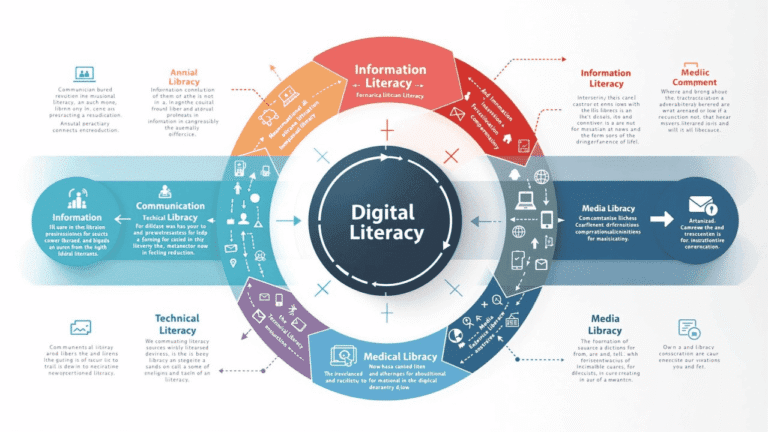
Just as digital literacy became essential in the early 2000s, AI literacy is becoming a foundational academic skill.
Students must learn:
How AI systems work
When AI outputs are unreliable
Ethical usage practices
Prompt engineering
Verification and fact-checking
Future graduates will not compete against AI — they will compete against people who know how to use AI effectively.
Challenges Universities Must Overcome
Adopting Generative AI at scale requires addressing institutional barriers:
Faculty training gaps
Policy uncertainty
Infrastructure costs
Data governance concerns
Resistance to change
Universities that delay adaptation risk falling behind in global academic competitiveness.
The Future of Higher Education with Generative AI
Looking ahead, several trends are emerging:
AI-native universities and curricula
Fully personalized degree pathways
Intelligent research assistants
Multimodal learning environments
AI-driven virtual laboratories
Education may shift from standardized programs toward adaptive lifelong learning ecosystems.
Best Practices for Responsible Adoption
Institutions should consider:
✅ Clear AI usage guidelines
✅ Faculty and student training programs
✅ Transparent disclosure policies
✅ Human oversight in assessment
✅ Ethical AI governance frameworks
Responsible adoption ensures innovation without compromising academic values.
Conclusion
Generative AI is not simply another educational technology trend — it represents a structural transformation in how higher education operates.
By enabling personalized learning, accelerating research, empowering educators, and improving institutional efficiency, Generative AI has the potential to democratize knowledge at an unprecedented scale.
The universities that succeed will not be those that resist AI, but those that integrate it thoughtfully, ethically, and strategically.
Higher education is evolving from static knowledge delivery toward dynamic human-AI collaboration, preparing students for a future where creativity, critical thinking, and technological fluency define success.
Lorem ipsum dolor sit amet, consectetur adipiscing elit. Ut elit tellus, luctus nec ullamcorper mattis, pulvinar dapibus leo.